Pages

Tuesday, September 7, 2010

Peter Minuit Buys Manhattan

In the summer of 1626, Peter Minuit made one of the best deals in realestate history.  He bought an island at the mouth of the Hudson River from Native American leaders for cloth, beads, and other goods that would be worth about $24 today.  The Native Americans called the island "Manhatta" - heavenly land.  Today we know it as Manhattan, the heart of one of the world's greatest cities, New York.

Minuit had been sent by the Dutch West Indian Company to take charge of the scattered Dutch settlements in present-day New Jersey and New York.  Minuit decided to move most of the settlers to the southern tip of Manhattan.  After buying the island, he built a crude fort and about 30 houses there.  Minuit returned to Europe after five years, but the settlement continued to grow.  Known as New Amsterdam, it became a busy port and the center of a thriving colony.  It was renamed New York by the British, who seized it in 1664.

As for Peter Minuit, he returned to the New World in 1638, in the service of Sweden, and made another smart purchase.  He bought land along the Delaware River from Native Americans.  Today that land is the site of Wilmington, Delaware. 

Peter Minuit was killed in a hurricane in 1638, while on a trading expedition to the West Indies.

Santa Fe

Santa Fe is the oldest capital city in the United States.  It was founded in the winter of 1609-1610 by Spanish settlers from Mexico as the center of Spain's royal colony of New Mexico.

Four four centuries, the central plaza has been the heart of Santa Fe.  Today, Native American artisans sell their jewelry, rugs and pottery along the plaza's walls.  A monument in the plaza marks the end of the famous Santa Fe Trail, which brought trading caravans to the city from Missouri. 

The four hundred year old Palace of the Governors on the plaza is the oldest government building in the United States.  This sprawling structure now houses a museum of New Mexico's history. 

Santa Fe is one of the nation's most popular tourist destinations.  Visitors are attracted by the city's rich mixture of Spanish, Mexican, Indian, and American cultures.  Its spectacular setting at the foot of the Sangre de Cristo Mountains; and its dry,sunny climate.  Tourists love exploring Santa Fe's picturesque streets and adobe buildings, dining in the city's superb restaurants, and shopping in its dozens of art galleries.  Annual events include the Santa Fe Opera, a chamber-music festival, a film festival, and the Fiesta de Santa Fe.

American troops took Santa Fe from Mexico without opposition in 1846.  During the Civil War, Confederate forces controlled the city for two weeks.

Baltimore

Baltimore’s fine harbor has always been the heart of the city. Shipping and shipbuilding thrived there before the Revolution. In the 1800s, sleek sailing ships called Baltimore clippers carried the region’s tobacco and flour to customers around the world. Goods of all kinds poured into the busy port first by wagon along the Cumberland Road and later on the nation’s first railroad, the Baltimore and Ohio.


In 1814, during the War of 1812, British troops bombarded Fort McHenry in Baltimore Harbor. To commemorate the event, Francis Scott Key, who witnessed the attack, wrote “The Star-Spangled Banner.”

Today, shops and restaurants line the rebuilt waterfront at Baltimore’s Inner Harbor. Visitors can see ocean creatures at the National Aquarium and tour the Constellation, which was launched in 1797. It is the oldest US warship still afloat.

About half of Maryland’s people live in and around Baltimore The city is a manufacturing center for electronics, chemicals, and steel. It has more than 30 universities, including John Hopkins and its famous medical school. Several renowned art museums and a symphony orchestra enrich the city’s cultural life. Baltimore’s showplace stadium, Oriole Park at Camden Yards, is home to the Baltimore Orioles. Enthusiastic fans often wear orange, the team’s color; some even paint themselves orange!

Friday, September 3, 2010

Frederick Douglass

In 1841, at an antislavery meeting in Massachusetts, a tall young African-American named Frederick Douglass stood up to speak. He knew about slavery, for he had been born a slave and had escaped only a few years earlier. People were moved by the young man’s story and his eloquent delivery. In the coming years, Douglass became a national leader in the antislavery movement and the most famous African-American of his time. He was a hero to many, black and white. But those who favored slavery considered him a powerful enemy.

In 1845, Douglass published his life story. Millions read it. But his old master in Maryland threatened to have him returned to slavery. He sailed to safety in England, where he earned enough money to buy his freedom. He returned to the US a free man. For many years, he published an antislavery newspaper, The North Star, which was widely read in the North. He made hundreds of speeches condemning slavery. And he helped slaves escaping to Canada on the Underground Railroad.

During the Civil War, Douglass recruited blacks for the Union army. When the conflict ended , he continued to speak out for the rights of African-Americans and women. He died in 1895, and remained a hero to those who continued his fight against racism.

He also served as US minister to Haiti from 1889 to 1891.

Friday, August 27, 2010

Clipper Ships


“Never, in these United States,” wrote historian samuel Eliot Morison, “has the brain of a man conceived, or the hand of man fashioned, so perfect a thing as the clipper ship.”
The word “clip,” which meant simply “to cut”, later came to mean “to move quickly”.” So a clipper ship was a fast-sailing one.

Clipper ships were the fastest and most beautiful sailing ships ever built. Between 1845 and 1859, American shipyards produced nearly 500 of them. The speediest were the giant Yankee clippers. With their masses of sail, these long, slender ships could travel up to 400 nautical miles a day.

Clippers were first built to carry goods to and from China. After the discovery of gold in California in 1848, they carried prospectors and supplies from the East Coast, to the gold fields. Earlier, this 15,000-mile trip around the southern tip of South America took five months. But by the early 1850s speedy clippers such as the Flying Cloud had cut the time to three months. Clippers set other records, too. In 1849, the Sea Witch sailed from Hong Kong to New York in 74 days. In 1852, the Challenger raced from Japan to California in 18 days. And in 1860, the Andrew Jackson sailed from New York to Liverpool, England, in 15 days. But by then steamships, which did not depend on wind, were replacing the clippers. The era of these “greyhounds of the sea” were coming to a close.

Tuesday, August 24, 2010

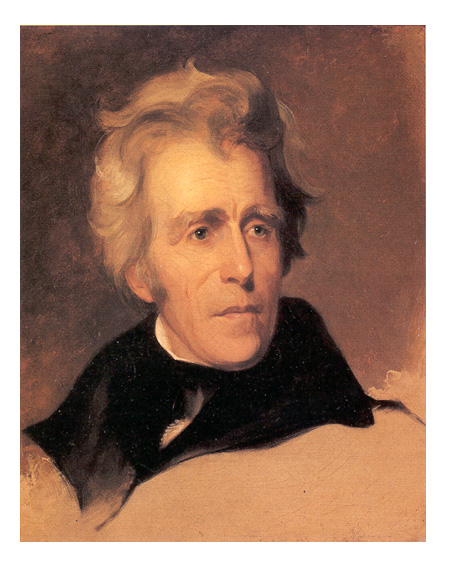
Andrew Jackson

Andrew Jackson was called “Old Hickory” by the soldiers he commanded. Like the hickory tree, he was strong and tough. But his soldiers loved him, and so did the American people.

Born in the backwoods log cabin. Jackson fought in the Revolutionary War when he was only 13. When he was 14, Andrew Jackson refused to shine the boots of a British officer. The officer slashed him with his sword, leaving a permanent scar on Jackson’s head.

As a young lawyer he moved to Nashville, Tennessee, where he became a cotton planter, a Congressman, and a militia officer. During the War of 1812 against Britain, he commanded the victorious American troops at the Battle of New Orleans. That triumph made Jackson a national hero. Although he narrowly lost the presidential election of 1824, he won easily four years later.

During his eight years in the White House, Jackson used his powers to strengthen the national government and improve the lives of ordinary Americans. He firmly opposed those who believed that individual states could nullify (cancel) laws they didn’t like. He fought against the Bank of the United States, which he thought favored the rich. And he vetoed many bills that seemed to him to be undemocratic. Because he fought for the average man against the wealthy, Andrew Jackson was known as “the people’s president.”

Monday, August 23, 2010

Colorado


In 1806, Zebulon Pike journeyed west to explore the vast territory the U.S. had bought from France in the Louisiana Purchase. Crossing the Great Plains into present-day Colorado, he reached the spectacular Rocky Mountains and the snow-covered mountain that now bears his name, Pikes Peak.

More than 50 years later, gold was discovered nearby. Thousands of propectors set out for the region, determined to reach “Pikes Peak or bust.” Loggers, ranchers, and farmers followed the miners to Colorado, which became a territory in 1861 and achieved statehood in 1876.


Today, 80 percent of Colorado’s residents live in the central part of the state, in a band of rolling hills along the edge of the Rockies. Denver, the capital and largest city, is there. The area boasts comfortable summers and cold, unusually sunny winters, periodically broken by the famous “Chinook” wind. A hot dry Chinook, gusting down from the mountains, can raise temperatures 30 to 40 degrees in an hour. Many of Colorado’s old gold-and silver-mining towns are now ghost towns, but mining remains important in the economy as do ranching, farming, and manufacturing. So is tourism.

Colorado is famous for its dramatic scenery, splendid national parks and forests and glamorous ski resorts such as Vail and Aspen.

Colorado, the highest state, has an average elevation of 6,800 feet.